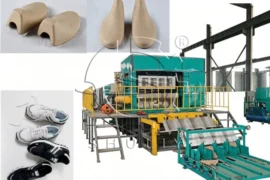
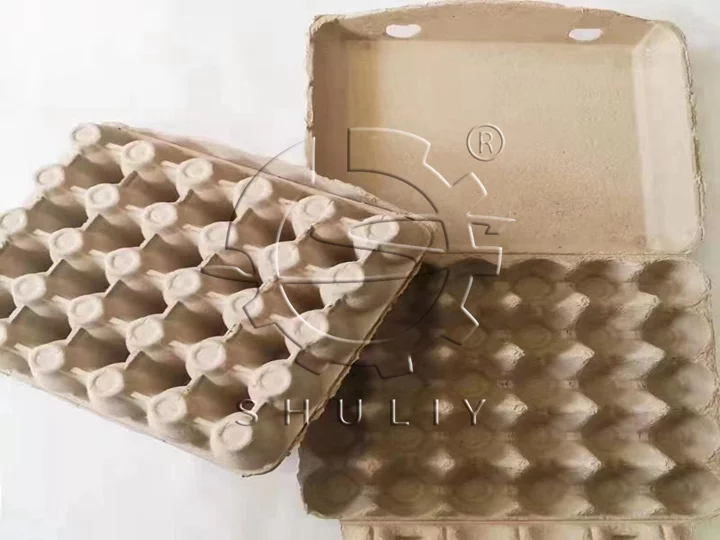
The egg carton production line is a complete turn‑key pulp‑molding system that converts waste paper into disposable egg cartons, egg trays and diversified buffer packaging. It integrates pulping, forming, drying and optional hot‑press stacking workflows, with flexible automation grades for small startup workshops and large‑scale industrial factories.
Capable of 1000‑8000 pieces per hour, this production line supports custom molds for egg boxes, fruit trays and other pulp‑molded articles, allowing investors to cut raw‑material costs and secure steady profits from waste‑paper recycling projects.
Egg carton production line for sale

- Raw materials: The egg carton production line utilizes recycled paper or pulp, such as waste paper, cardboard, magazines, books, A4 paper, notebooks, newspapers, white paper, discarded egg trays, and other paper-based products.
- Application: The line is designed to manufacture sturdy and functional egg cartons that safeguard eggs or other items during storage and transportation. At the same time, it fulfills packaging industry requirements while promoting environmental sustainability through resource recycling.
How does the egg carton production line work?
- Pulping system: Raw materials like recycled paper are processed by the egg tray pulping machine into a slurry consistency for further molding.
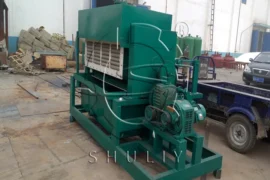
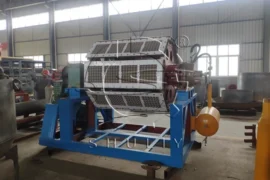
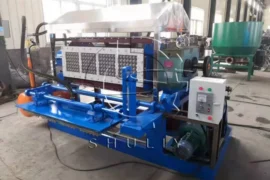
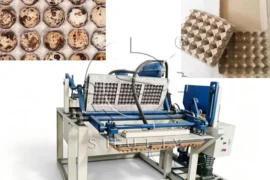
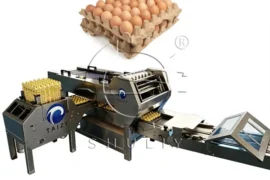
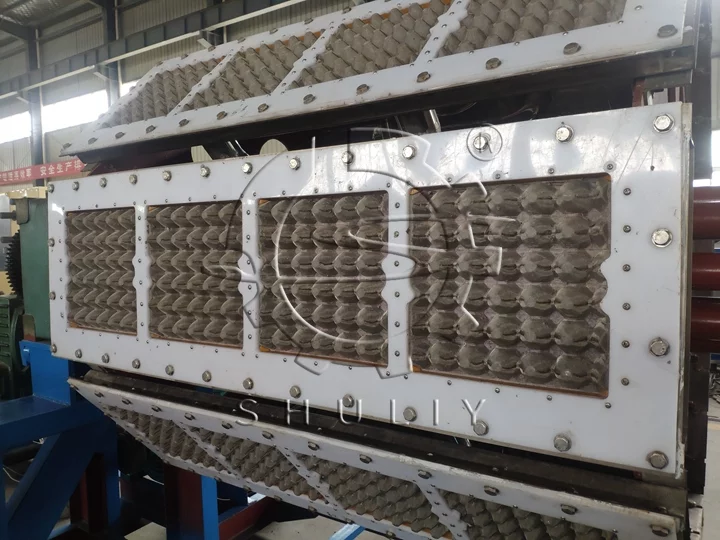
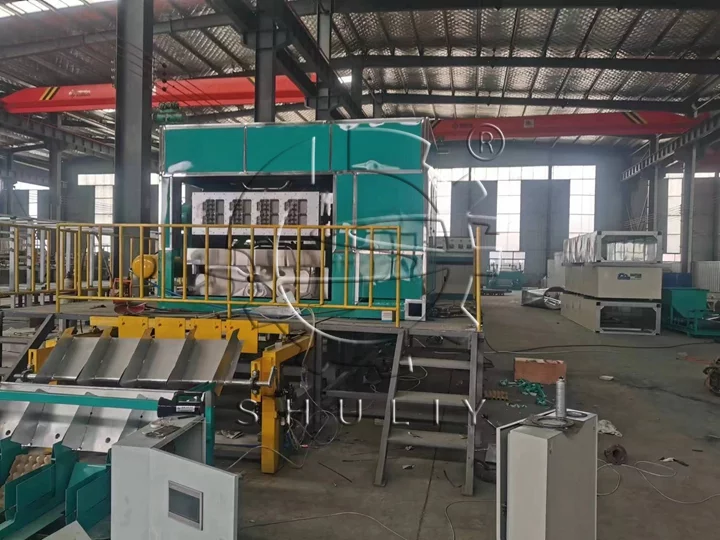
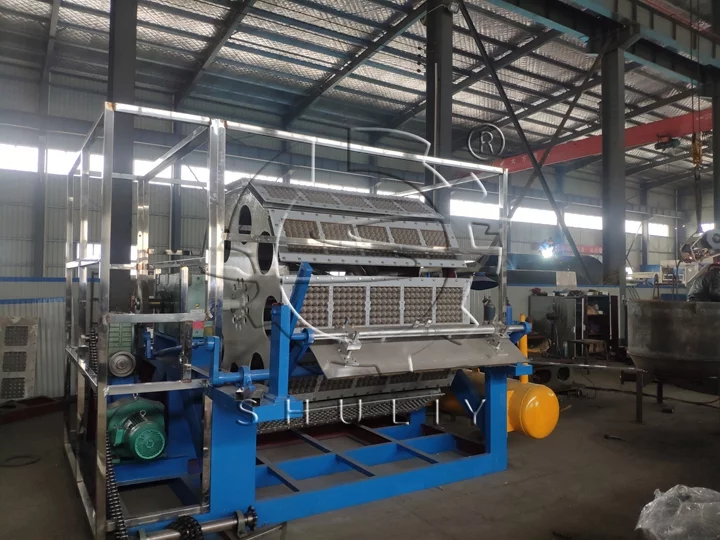
- Molding process: The slurry is shaped into egg cartons using pulp molding machines. Options include automatic, semi-automatic, and small egg tray machines to suit different production capacities.


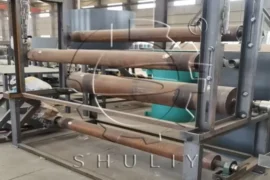
- Drying system: Wet egg cartons undergo drying to remove excess moisture and improve strength. Methods include natural drying, brick drying, or mechanical drying, depending on project needs.
- Packing machine: Finished egg trays are compressed and stacked for stability, saving storage space and reducing the risk of damage during transportation.
Technical specification of pulp molding machine
| Model | Capacity | Paper consumption | Water consumption | Energy used | Worker |
| WJ-3*1 | 1000pcs/h | 80kg/h | 160kg/h | 38kw/h | 3-4 |
| WJ-4*1 | 1500-2000pcs/h | 120kg/h | 240kg/h | 38kw/h | 3-4 |
| WJ-3*4 | 2000-2500pcs/h | 200kg/h | 400kg/h | 55kw/h | 4-5 |
| WJ-4*4 | 2500-3000pcs/h | 240kg/h | 480kg/h | 60kw/h | 4-5 |
| WJ-4*8 | 4000-5000pcs/h | 320kg/h | 640kg/h | 95kw/h | 3-4 |
| WJ-5*8 | 5000-6000pcs/h | 400kg/h | 800kg/h | 95kw/h | 3-4 |
| WJ-6*8 | 6000-7000pcs/h | 480kg/h | 960kg/h | 120kw/h | 3-4 |
What you can get in the egg carton production line?
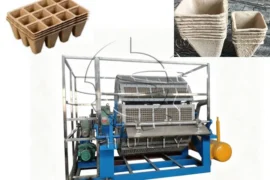
From our egg carton production line, and pulp molding machine, you can produce a variety of final products that cater to different packaging needs.
These finished paper trays can be used in different industries, such as poultry farming, food industry, retail, e-commerce, agricultural, electronic, or special industries. These include:
- Standard egg cartons: Protect eggs during storage and transport.
- Fruit trays: Package fruits like apples.
- Cup carriers: Carry cups or small containers.
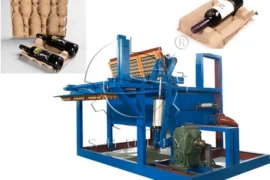
- Wine bottle trays: Secure wine bottles in transit.
- Electronic component trays: Store delicate electronics.
- Seedling trays: For nursery and seed cultivation.
- Customized packaging: Tailored to customer needs.

Egg carton production line advantages

- High-quality & durable egg trays: Sturdy and eco-friendly, ensuring eggs are well-protected during storage and transport.
- Cost efficiency: Simple processes, compact design, and reduced labor requirements lower overall production costs.
- High production efficiency: Stable and automated operation enables large-scale output in less time.
- Customizable options: Molds and capacities can be tailored to meet diverse market demands.
- Reliable performance: Consistent operation ensures uniform quality and minimizes waste.
- Expert technical support: Professional guidance is available for troubleshooting and optimization.
- Installation & commissioning: Full support for setup ensures smooth operation from day one.
- Comprehensive after-sales service: Warranty, spare parts, and maintenance services keep the line running reliably.

How to choose a suitable egg carton production line?
Multiple factors shall be evaluated before placing your order: expected hourly capacity, local workshop floor space, capital budget, energy source condition and target finished‑product types. Below is a quick configuration reference table for your preliminary assessment:
| Project Scale | Recommended Capacity | Suggested Drying Option | Target Users |
|---|---|---|---|
| Small Startup | 1000‑2000 pcs/h | Natural drying rack / brick dryer | New investors with limited budget |
| Medium Factory | 3000‑5000 pcs/h | Brick tunnel dryer | Stable local poultry & packaging market |
| Large Industrial Plant | 6000‑8000 pcs/h | Metal continuous dryer | Mass‑output export‑oriented manufacturers |
Note: Our engineering team will tailor‑make the exact machine combination after learning your detailed project parameters.

How much does an egg carton production line cost?
The cost of an egg carton production line depends on production capacity, automation level, forming machine configuration, drying system, and auxiliary equipment. A small production setup generally requires a lower initial investment, while a high-capacity line with an automatic drying and packing system requires a larger budget.
When planning your investment, consider the following expenses:
- Equipment cost: Forming machines, pulping systems, dryers, and auxiliary equipment.
- Raw material cost: Waste paper, recycled cardboard, and other suitable paper materials.
- Utility costs: Electricity, water, and the energy required for drying.
- Labor cost: Operators needed for production, handling, and packing.
- Installation and logistics: Shipping, installation, commissioning, and other project-specific expenses.
To receive an accurate quotation, provide your target hourly output, preferred egg carton design, available factory space, local power supply, and preferred drying method. We can then recommend a suitable configuration for your project.
Frequently asked questions
How much workshop floor space does a full set of egg carton line need?
Space requirement varies with capacity and drying type. Small‑scale lines need around 200‑300 ㎡, while large‑volume full‑auto lines require 800 ㎡ or above. We will provide exact site layout drawing for your reference.
What is the core difference between brick tunnel dryer and metal continuous dryer?
Brick tunnel dryer features lower investment cost and stable heating effect for medium‑size projects. Metal continuous dryer delivers higher automation and faster drying speed, suitable for high‑output large factories with higher budget.
How many workers are needed to operate a full‑automatic egg carton production line?
A full‑automatic line normally needs 2‑4 operators, depending on your selected configuration. Semi‑automatic lines require more manual labor.
Which factors influence the total investment of the egg carton manufacturing project?
Key factors contain production capacity, drying system selection, automation level, mold quantity and local site construction conditions.
Conclusion
Whether you are a poultry farmer, a distributor, an egg supplier, or an investor in the egg tray manufacturing process, our egg carton production line and pulp molding machines will provide you with the reliability, scalability, and flexibility you need to meet market demands.
Contact us today to discuss your requirements, explore customization options, and start your journey toward a successful paper tray making business.