
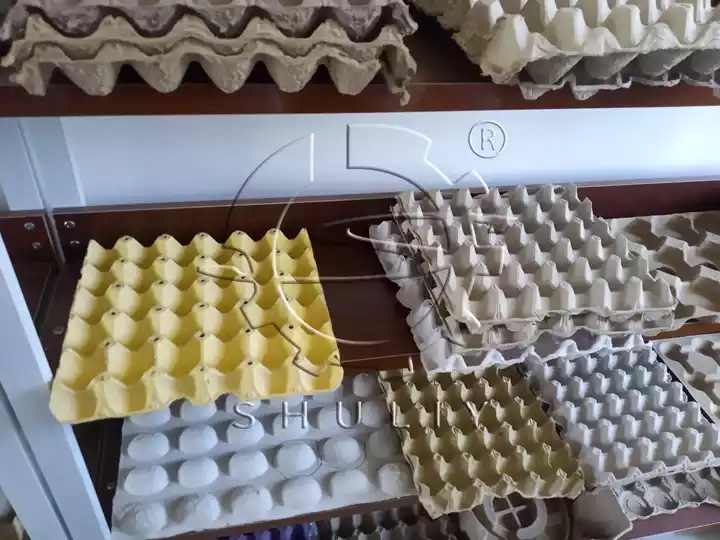
Egg tray molding rate directly decides the yield and profit of your pulp molding production line. Many egg tray manufacturers face common troubles: deformed trays, broken edges, uneven wall thickness, pinholes and low qualified rate.
These problems are usually caused by unstable pulp conditions, improper vacuum settings, worn molds or irregular operation. Below we share actionable, field-tested methods to lift the egg tray molding rate for your pulp molding machine.
Stabilize Pulp Slurry Quality and Consistency
Pulp quality is the foundation of high molding rate. Unstable pulp will lead to inconsistent fiber deposition and a large number of defective egg trays.
First, control pulp concentration properly. The ideal pulp concentration range for egg tray production is 4%–5%. If concentration is higher than 6%, the pulp becomes poor in fluidity, fibers stack unevenly and wall thickness difference becomes obvious.
If it is lower than 3%, fiber content is insufficient, and wet egg trays are easy to tear during demolding and transfer. It is better to install an online concentration meter instead of judging by eyes only.
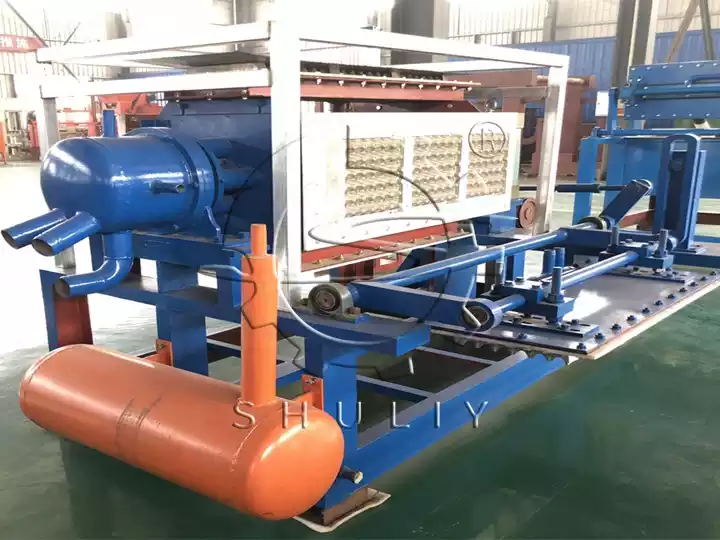
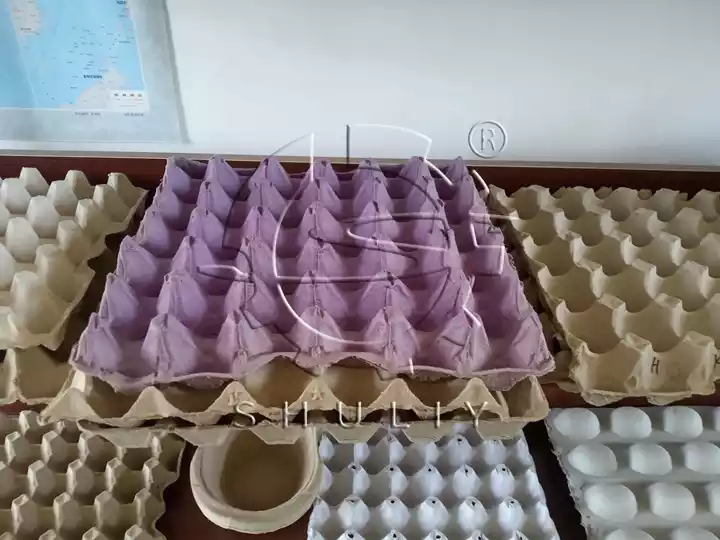
Second, manage raw paper materials. Different waste paper types like corrugated paper, newspaper and office paper have different fiber length and drainage speed. Do not mix too many types of raw paper randomly.
Remove plastic, tape, staples and other impurities before pulping, because hard debris will block mold screens and create holes on egg trays. Adjust pulping and refining time to get suitable fiber length for good inter-fiber bonding.
You can also add qualified additives moderately according to your formula, to improve wet strength and reduce the breakage rate of wet blanks.
Optimize Vacuum Forming Parameters
Vacuum pressure and adsorption time are core parameters for pulp molding. Wrong vacuum settings are one of the top reasons for low molding rate.
For normal egg trays with wall thickness of 1–2 mm, the recommended vacuum pressure ranges from -0.07 MPa to -0.08 MPa. If vacuum pressure is too low, fiber cannot be fully adsorbed on the mold surface, resulting in thin, soft and deformed trays.
If vacuum pressure is too high, fibers will be over-compressed. Trays will shrink heavily after drying and may crack easily. The adsorption time is usually kept at 4–6 seconds to get uniform fiber coverage on every position of the mold.


Check the whole vacuum pipeline regularly. Air leakage, blocked vacuum filters and unbalanced suction will form vacuum dead zones on the mold surface. In these dead zones, fibers cannot deposit evenly, causing missing corners and thin edges. Keep the vacuum pump, valves and pipelines sealed and unobstructed all the time.
Maintain and Upgrade Egg Tray Molds
Mold condition greatly affects molding accuracy and qualified rate. Even a good pulp molding machine cannot produce high-quality egg trays with damaged or clogged molds.
Clean mold screens and drainage grooves every shift. Dried pulp residue, fiber cake and debris will block tiny holes, block air flow and make suction uneven. Use compressed air and low-pressure water washing to clean the mold gently.
Do not scratch the screen surface with hard tools. Check mold sealing strips and edge gaps frequently. Poor sealing leads to inconsistent suction and burrs on tray edges.

If you are using old molds with deformed surfaces or damaged screens, consider upgrading to precision aluminum molds. Well-machined aluminum molds have uniform drainage channels, better air permeability and longer service life, which helps stabilize the molding rate for long-time continuous production.
Standardize Transfer, Demolding and Drying Matching
Many egg trays are not broken during forming, but damaged in demolding, transfer and drying stages. This part is often ignored by factory operators.
Wet egg trays contain 60%–75% moisture after forming, so they are fragile. Slow down the transfer speed of the mold arm and avoid sharp impact when releasing wet trays. Set proper vacuum release sequence to make the wet blank separate from the mold smoothly.

Match the drying system with forming speed. If the drying temperature rises too fast, the surface of egg trays will shrink rapidly and crack. If the drying capacity is insufficient, wet trays will be stacked for a long time and deform before entering the dryer. Keep the forming cycle and drying rhythm synchronized on your whole pulp egg tray production line.
Strengthen Daily Operation Management and Preventive Maintenance
Stable machine operation is the guarantee of continuous high molding rate. Develop a standard maintenance checklist for your pulp molding machine.
- Inspect the pulp mixing tank, circulating pump and pipeline to avoid pulp sedimentation and local concentration difference.
- Check motor, vacuum pump and air compressor regularly to prevent sudden shutdown during mass production.
- Train operators to record parameters, classify defective products and track the root cause of bad trays.
- Keep the production environment temperature and humidity stable. Big ambient humidity changes will affect drainage speed and tray forming effect.
บทสรุป
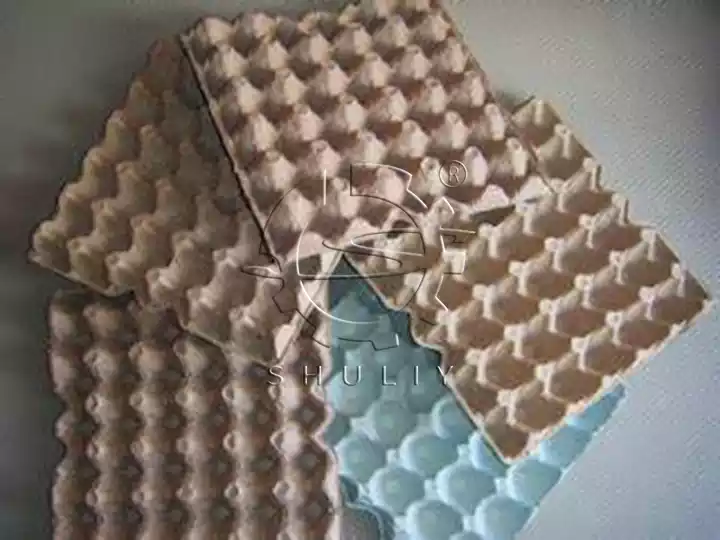
Improving egg tray molding rate is a systematic job, covering pulp preparation, vacuum forming, mold maintenance, transfer and drying coordination.
By stabilizing pulp consistency, tuning vacuum parameters, keeping molds clean and precise, and standardizing operation steps, most pulp molding factories can obviously cut rejection rate and get more qualified egg trays from the same machine and raw materials.
If you are looking for a reliable pulp molding egg tray making machine or full production line solution, contact us for technical support and parameter guidance.