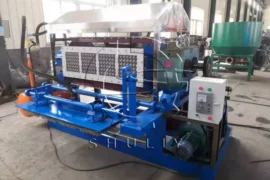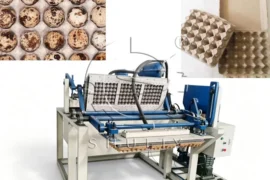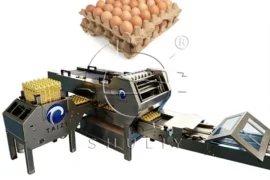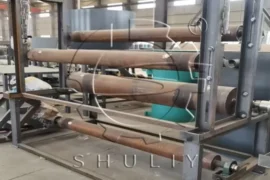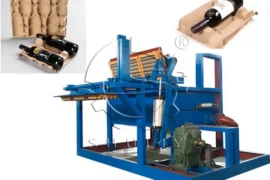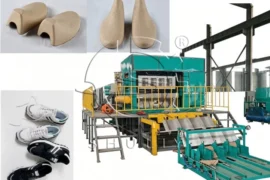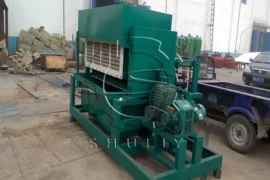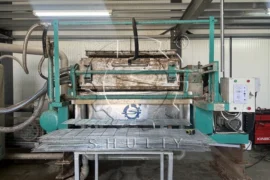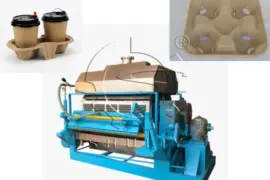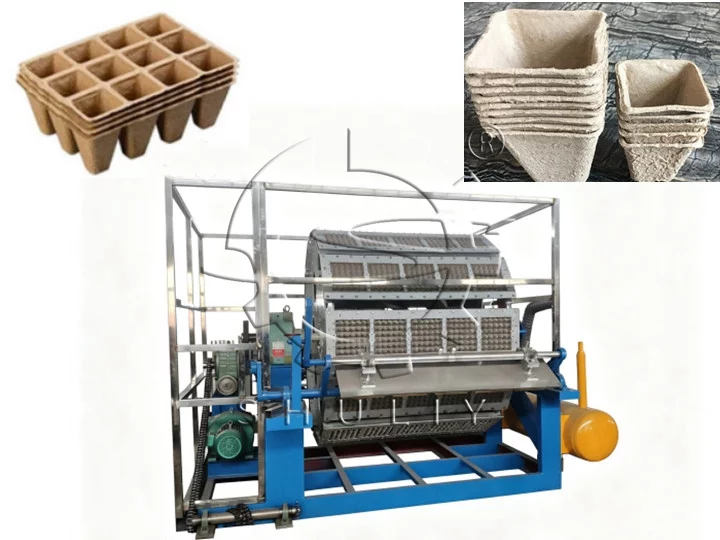
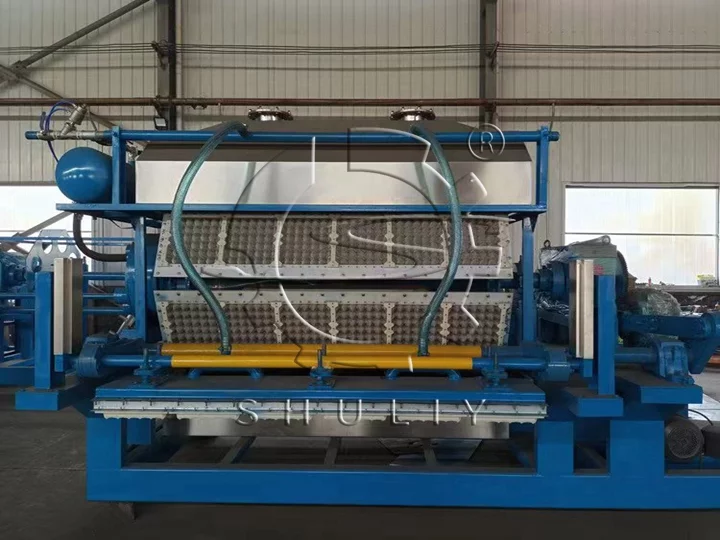
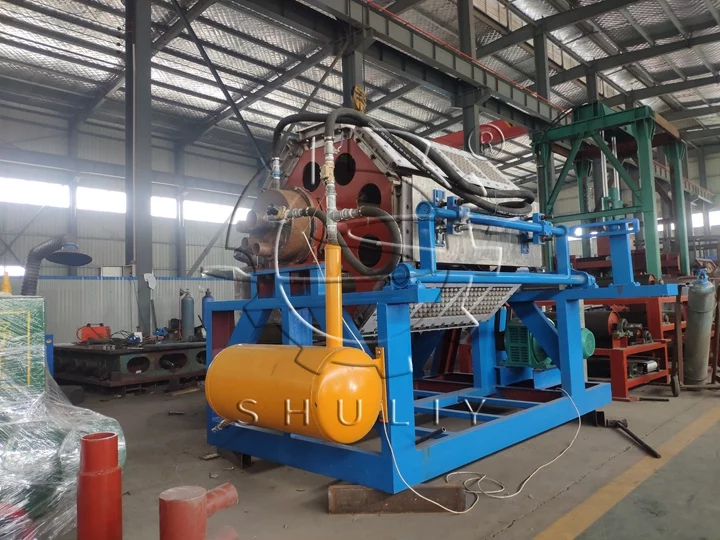
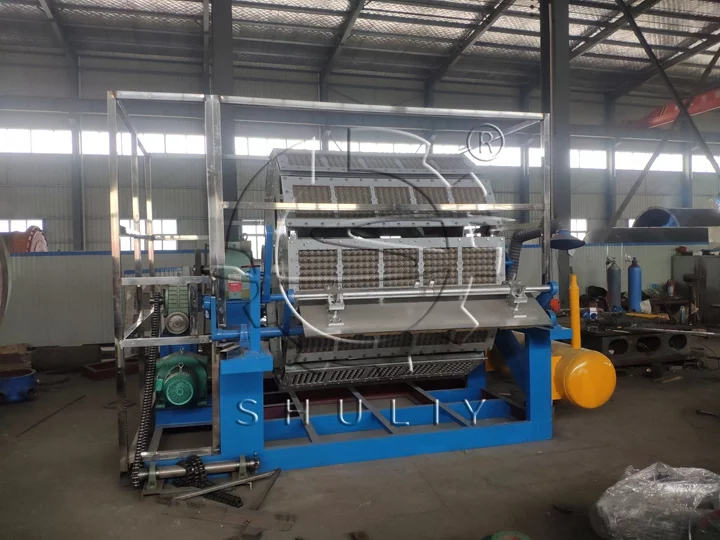
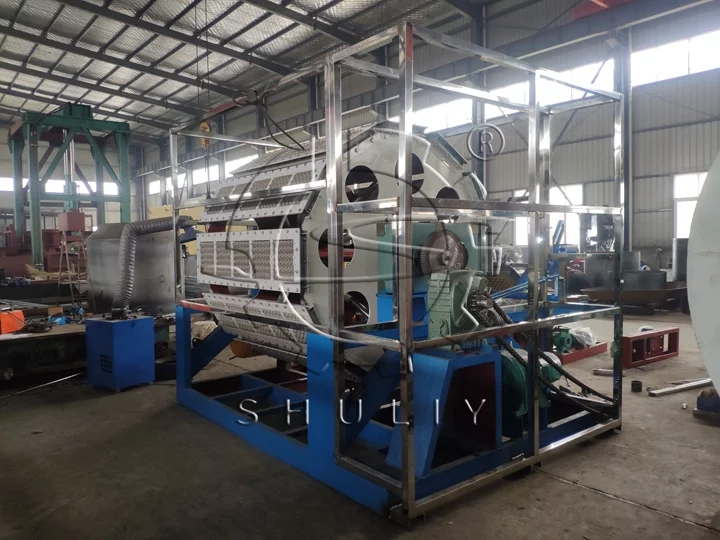
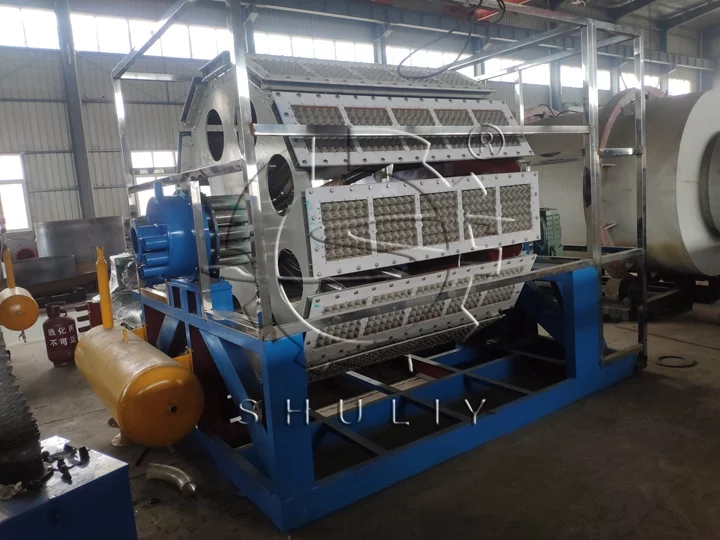
The nursery tray making machine is a specialized pulp‑molding agricultural processing device that converts waste paper, cardboard and crop fiber residues into biodegradable paper‑based nursery trays through vacuum adsorption, mould forming and dehydration processes. It supports output capacity ranging from 1000‑7000 pieces per hour, covering small‑batch trial production to large‑scale commercial manufacturing.
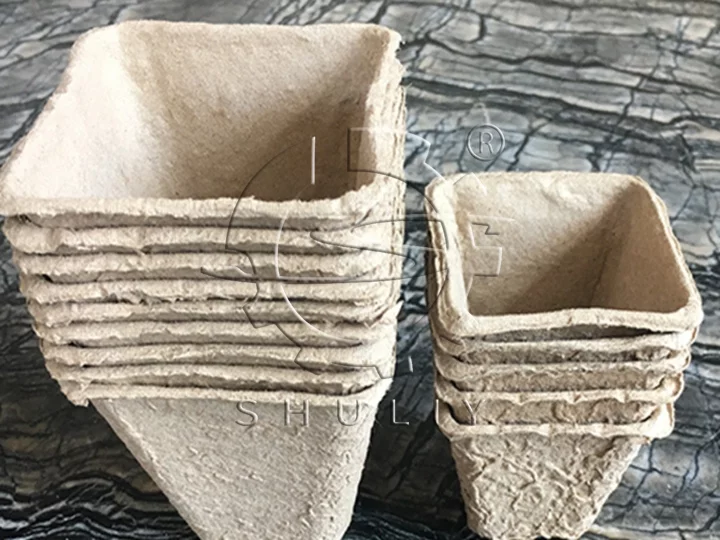
The finished biodegradable nursery trays can be transplanted directly into soil together with seedlings, widely adopted in vegetable planting, flower breeding, rice seedling raising, tobacco cultivation, fruit seedling propagation, greenhouse nurseries and large‑scale farm seedling factories.
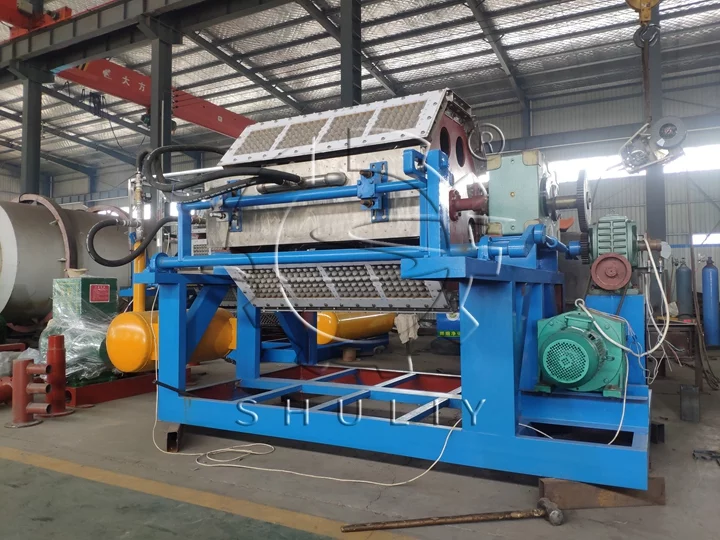
Nursery Tray Making Machine for Sale
A nursery tray making machine is specialized equipment for manufacturing trays used to raise seedlings before transplanting. Compared with manually producing trays, the machine provides more consistent dimensions and higher production efficiency.
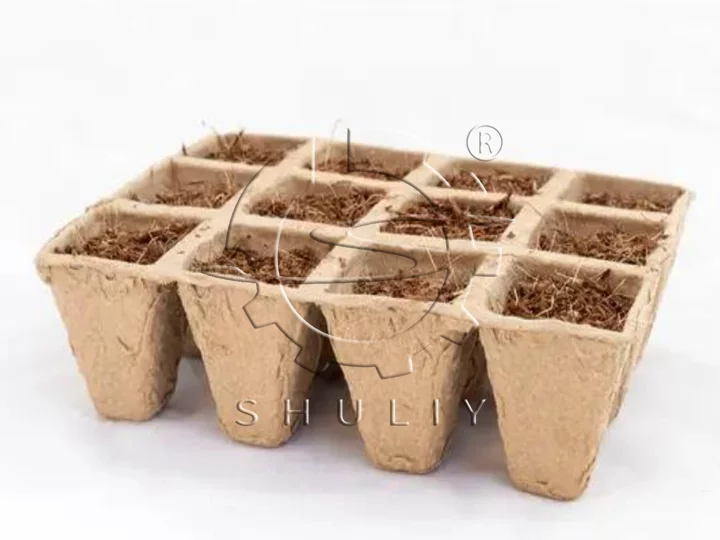
The pulp-based trays are suitable for vegetables, flowers, rice, tobacco, fruit trees, and other crops. Different molds can also be configured to produce trays with different cell numbers and sizes according to planting requirements.
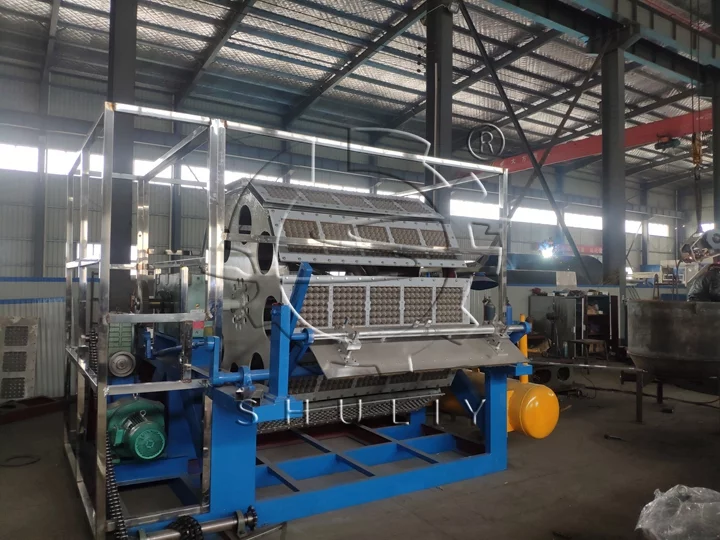
Raw Materials for Nursery Trays
The machine can process a variety of fibrous materials, including:
- Waste paper
- Recycled cardboard
- Wood pulp
- Rice husk powder
- Coconut coir
- Corn stalk powder
- Bamboo powder
These materials are mixed with water and processed into a suitable pulp slurry before entering the forming system. Using recycled and agricultural materials can help turn low-value waste into useful nursery products.
How Does the Nursery Tray Making Machine Work?
The production process mainly includes several stages:
Raw material preparation → pulping → pulp forming → dewatering and pressing → drying → inspection → packaging
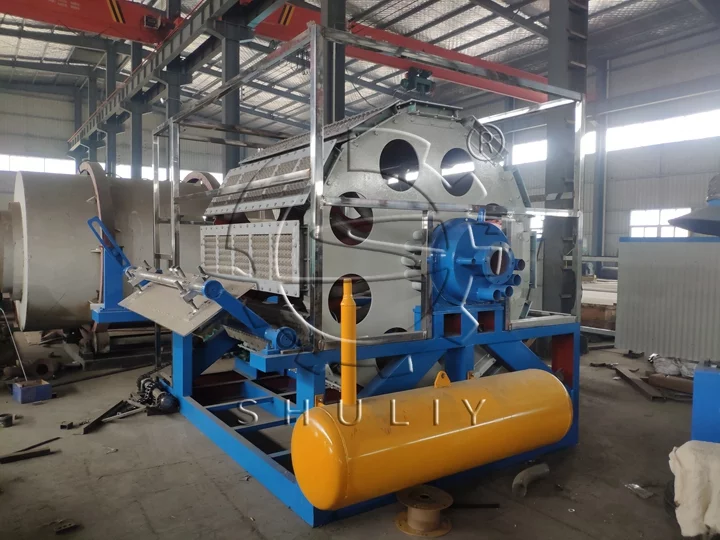
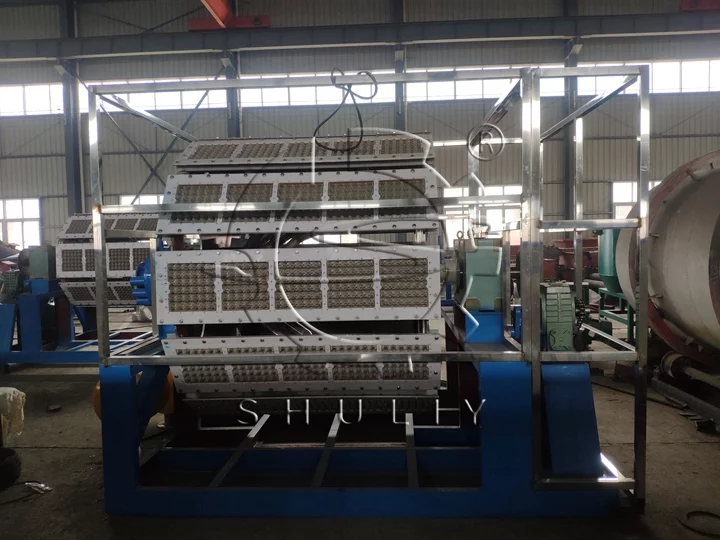
First, the raw materials are prepared and converted into uniform pulp. The pulp is then delivered to the molding system, where vacuum suction helps form it around the selected tray mold. After forming, excess water is removed to improve the tray’s structure.
The wet trays are subsequently dried using suitable drying equipment. After drying and quality inspection, the finished nursery trays can be stacked, packed, and prepared for transportation or use.
Nursery Tray Making Machine Capacity
Different production capacities are available to match the scale of your nursery tray business. The current SL series covers 1,000 to 7,000 trays per hour, with machine power ranging from 38 to 120 kW.
| نموذج | سعة | قوة |
|---|---|---|
| SL-1000-3X1 | 1,000 trays/h | 38 كيلواط |
| SL-1500-4X1 | 1,500 trays/h | 38 كيلواط |
| SL-2500-3X4 | 2,500 trays/h | 55 كيلواط |
| SL-3000-4X4 | 3,000 trays/h | 60 كيلواط |
| SL-4000-4X8 | 4,000 trays/h | 95 كيلواط |
| SL-5000-5X8 | 5,000 trays/h | 95 كيلواط |
| إس إل-7000-6X8 | 7,000 trays/h | 120 كيلواط |
The appropriate model can be selected according to required output, available raw materials, production space, and investment budget.
Applications of Pulp Nursery Trays
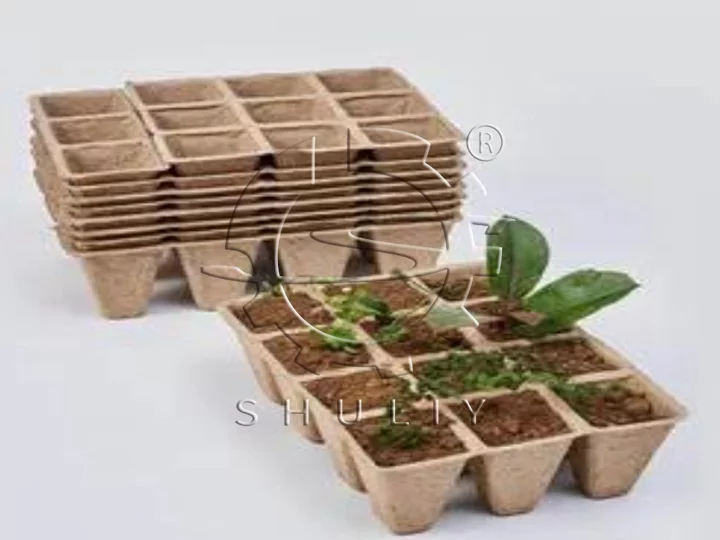
The nursery trays produced by this machine can be used in a wide range of agricultural applications, including:
- Vegetable seedling cultivation.
- Flower and ornamental plant nurseries.
- Rice seedling production.
- Tobacco seedling cultivation.
- Fruit tree nurseries.
- Greenhouse seedling production.
- Commercial plant nurseries.
For example, different cell configurations can be selected according to the crop and root-space requirements. The machine can also be equipped with customized molds for specific tray designs.
Advantages of Nursery Tray Making Machine
- Eco-Friendly Production
- Pulp nursery trays can be produced from recycled paper and other fiber-based materials. This provides an alternative to conventional plastic nursery trays and supports more sustainable agricultural production.
- Consistent Tray Quality
- The molding system helps produce trays with relatively uniform shapes and dimensions, which is important for organized seedling cultivation and mechanized planting.
- Flexible Mold Options
- Different molds can be supplied according to the required tray size and cell configuration. This makes the machine suitable for different crops and nursery applications.
- Suitable for Different Production Scales
- With capacities from 1,000 to 7,000 trays/h, the equipment can be used for small and medium nursery businesses as well as high-volume commercial production.
- Reduced Labor Requirements
- Automated forming and drying processes reduce the amount of manual work required compared with traditional tray production methods, particularly when integrated into a complete pulp molding production line.
Why Choose a Nursery Tray Making Machine?
For businesses producing large quantities of seedling trays, automation can improve production consistency and make output easier to scale. When selecting a machine, buyers should consider production capacity, raw material availability, mold configuration, automation level, drying method, power consumption, maintenance requirements, and total investment cost.
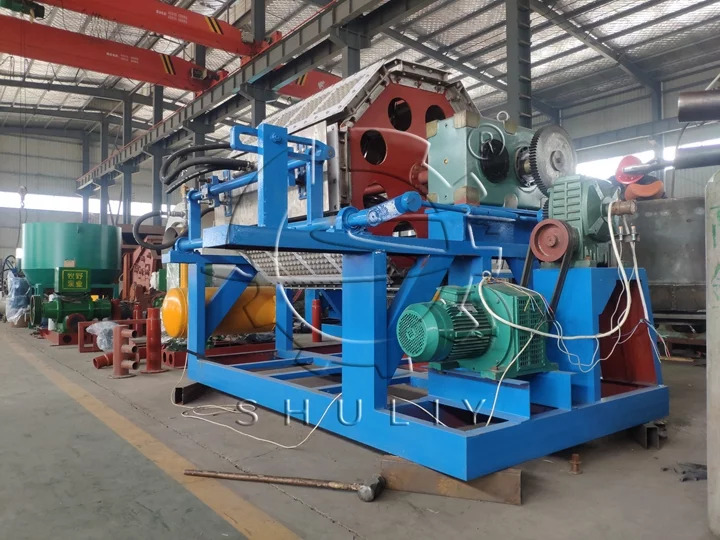
A properly configured Nursery Tray Making Machine can provide an efficient way to convert recycled pulp and plant fibers into practical seedling trays while supporting the growing demand for sustainable agricultural products.
خاتمة
With reliable performance, flexible mould‑changing capacity and eco‑friendly output, our nursery tray making machine delivers a cost‑effective, long‑term production solution for biodegradable seedling‑raising tray manufacturers.
Beyond nursery tray equipment, we also supply a full range of special‑shaped pulp tray forming machines. These multi‑functional devices can produce egg trays, fruit packaging trays, and bottle holders by switching molds.
Whether you need a standalone nursery‑tray unit, a complete turn‑key production line or other customized pulp‑molding machinery, feel free to send us your requirements for a detailed quotation. Our team is ready to offer you professional machine selection guidance and tailored solutions.