
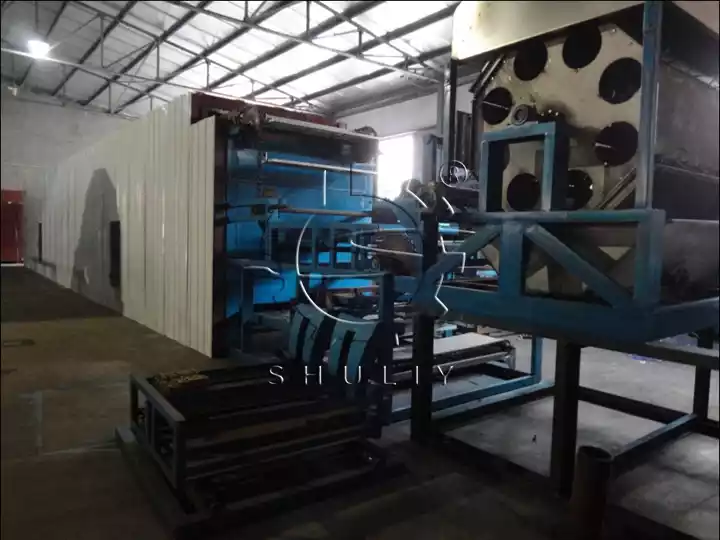
Many buyers focus only on the forming‑section rated capacity of an egg tray machine, such as the popular 3000‑3500 pcs/h paper egg tray machine, and overlook the huge influence of the drying system. In pulp‑molded egg tray production, wet egg trays coming off the forming mold contain high moisture content.
Without properly matched drying throughput, your real sellable output will never reach the machine’s nameplate value. This article explains how drying limits or boosts your total production capacity, compares mainstream drying solutions, and shares practical tips for line configuration.
What Is Rated Capacity vs Actual Sellable Capacity?
The rated capacity based purely on the forming mold’s cycle speed. For example, the SL‑3*1 3000‑3500 pcs/h egg tray machine means the forming unit can produce 3000‑3500 wet egg trays per hour under ideal conditions.


These newly‑formed wet trays hold large volumes of water. The forming machine can keep spitting out wet trays, but if your drying system cannot process them at the same speed, wet trays will pile up. Operators then must slow down or pause the forming station to avoid deformation, crushing, and high reject rates.
- Rated capacity: Theoretical wet‑tray output of the forming machine.
- Actual sellable capacity: Quantity of fully dried, qualified egg trays ready for sale after drying, quality inspection and waste removal.
Key point: Your drying system sets the upper limit for real production capacity, not only the forming machine itself.
How Drying Systems Restrict or Improve Egg Tray Output?
Drying throughput creates the production bottleneck
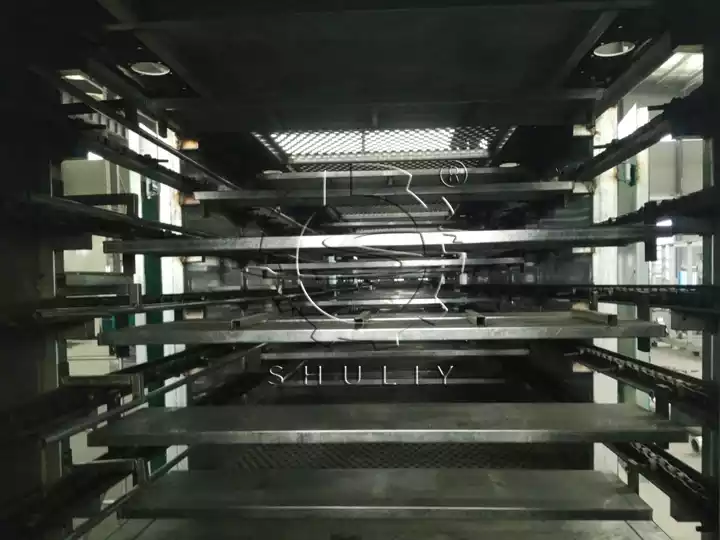

Every wet egg tray from the rotary forming machine requires a certain residence time inside the dryer to drop moisture down to the qualified 8‑12% range. If your dryer can only handle 2200 pieces per hour, even if your forming machine runs at 3500 pcs/h, you cannot use the full forming speed. You have to throttle the forming machine to match dryer capacity, wasting the potential of your main egg tray machine.
This scenario is very common for medium‑size lines like the 3000‑3500 pcs/h egg tray production line. Many customers buy the high‑speed forming machine but install an undersized drying setup and end‑up operating far below specification.
Different drying types deliver different continuous output performance
Three major drying options are available for paper egg tray projects: natural sun drying, brick‑built tunnel dryer, and multi‑layer metal mesh‑belt dryer. Each delivers different capacity performance for the same forming machine.
Natural sun drying

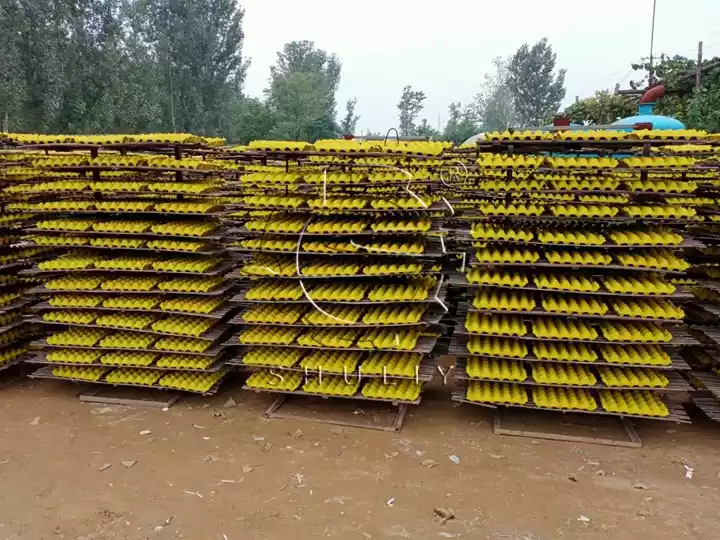
Natural drying uses sunlight and open‑air ventilation with almost no fuel cost. However, it is heavily weather‑dependent and requires huge workshop or yard space. Drying cycles can take many hours or days. Even if your forming machine can reach 3000‑3500 pcs/h, natural drying cannot support such high hourly throughput. It is only fit for small‑scale output below 1500 pcs/h and dry‑climate workshops. In rainy or humid seasons, production may halt completely.
Brick‑built tunnel dryer
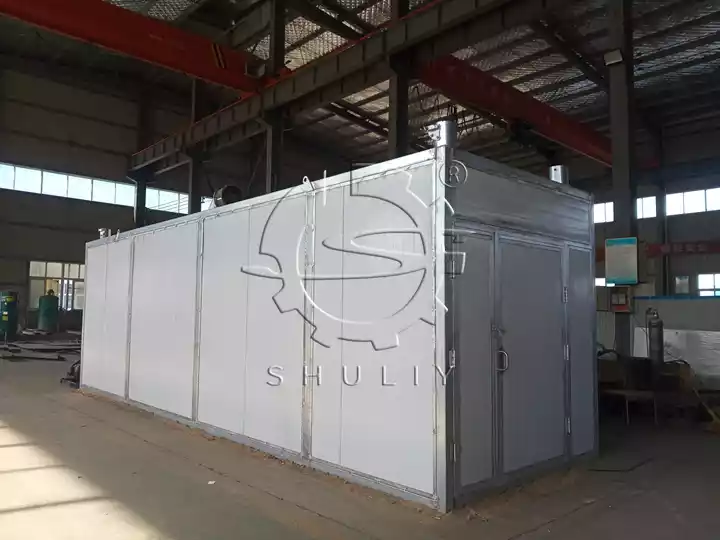
Brick drying tunnel is widely used for commercial pulp molding projects, including many 3000‑3500 pcs/h egg tray lines. It can run non‑stop regardless of weather, using coal, wood chips, diesel or natural gas as heat sources. When properly sized, brick dryers can keep up with 2500‑3500 pieces per hour continuously. The main limitation is construction quality: poor insulation or uneven hot‑air circulation will reduce effective throughput and raise reject rates of cracked or under‑dried egg trays.
Multi‑layer metal mesh‑belt dryer
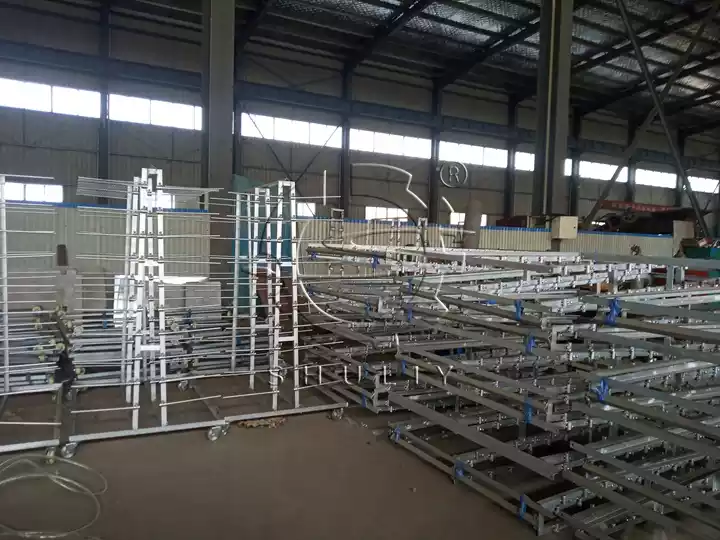
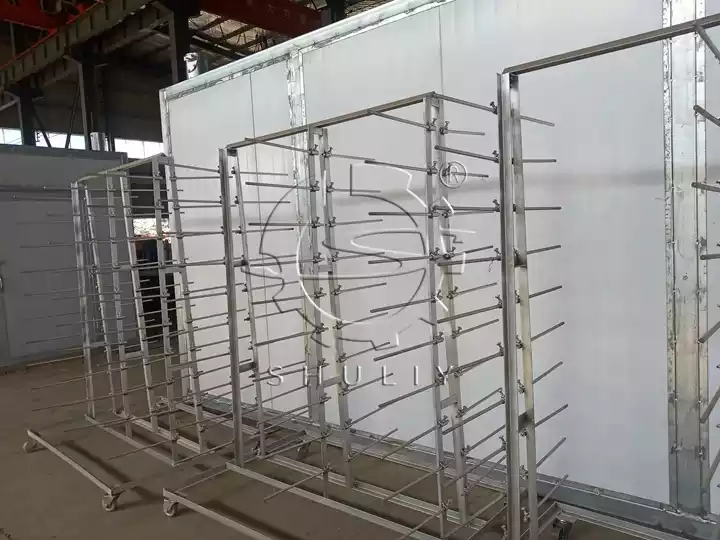
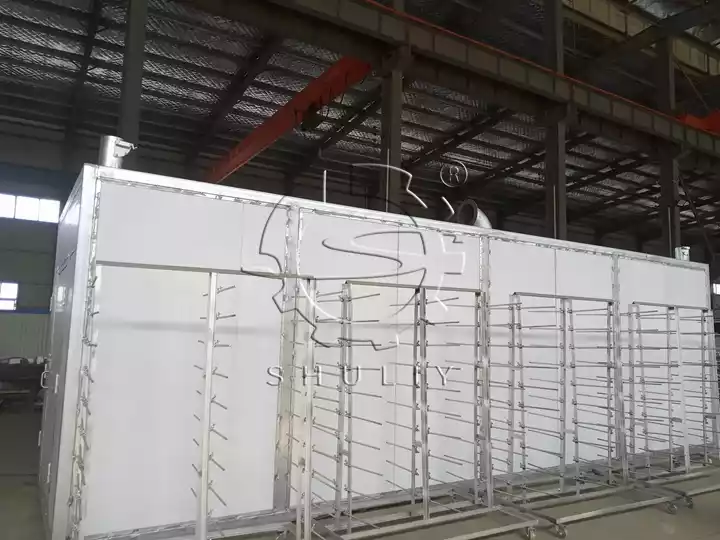
Metal dryers feature pre‑fabricated steel structures with multi‑layer conveyor belts. They occupy less floor space and deliver stable hot‑air circulation. For a 3000‑3500 pcs/h egg tray machine, a matched multi‑layer metal dryer can maintain full‑speed continuous production with consistent tray quality. The trade‑off is higher initial investment compared to brick drying. It is ideal for factories pursuing stable high‑capacity output and minimal manual handling.
Humidity, temperature and fuel conditions change real dryer capacity
Ambient humidity directly impacts drying efficiency. During rainy seasons, the same dryer will process fewer egg trays per hour than in dry weather. If heat supply is insufficient, drying time becomes longer and total line capacity drops accordingly. That is why two factories with identical 3000‑3500 pcs/h egg tray machines can end‑up with different real output numbers.
Matching Drying System to Your Egg Tray Machine Model
When you select equipment such as the 3000‑3500 pcs/h paper egg tray machine, do not evaluate the forming machine in isolation. You must match the dryer throughput to the forming rated capacity.
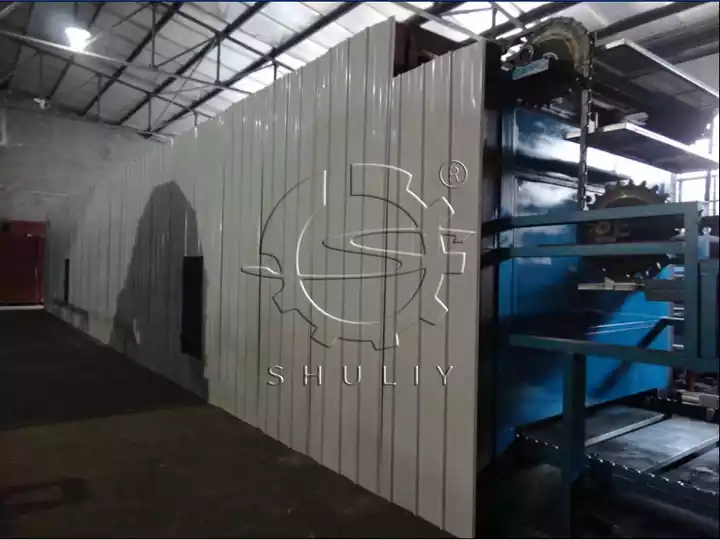
- If you target stable full‑rate 3000‑3500 pcs/h sellable output: choose a well‑built brick tunnel dryer or multi‑layer metal dryer. Avoid natural drying.
- If you install a dryer with smaller throughput than forming capacity: expect your actual sellable output to be limited by the dryer.
- Consider local climate and available fuel source. Humid locations require stronger drying capacity.
Common Mistakes Buyers Make With Drying and Capacity
- Only compare forming machine pcs/h data and ignore dryer configuration.
- Expect natural sun drying to support 3000+ pcs/h commercial production.
- Select low‑cost undersized dryers to save budget, resulting in throttled production and high defective rates.
- Neglect seasonal humidity changes when calculating expected output.
خاتمة
The egg tray forming machine defines your theoretical production ceiling, while the drying system decides what output you can actually achieve day‑to‑day. Even a high‑performance 3000‑3500 pcs/h paper egg tray machine cannot reach its potential without a properly matched drying setup.
When planning your pulp‑molding business, evaluate forming capacity, drying throughput, workshop space, local climate and fuel cost together, to get reliable and profitable real‑world production.